
 This isn’t original but it's worth restating.
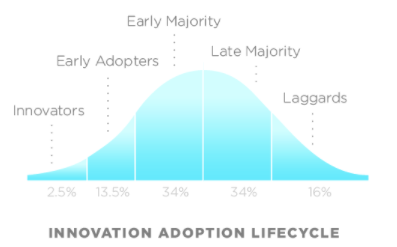
Maybe ‘change’ is so difficult because it’s so hard to know ‘when’ it’s the right time? That applies to life in general, but certainly to technology fields, like ours. In fact, there’s a whole body of study around the risk and benefit calculations made around technology, including my favorite description, the technology adoption life cycle. I am thinking about this today because I just had my first success with Esri’s latest GIS software product platform, ArcPro.
I am pretty sure that I am not considered an ‘Innovator’ or ‘Early Adopter’ for this change, especially considering how many GIS shops seem to bite instantly on the ‘you have to move now to version x.x’ hook without much thought. But maybe I am making the ‘Early Majority’ cut? It doesn’t really matter. It did, however, remind me of previous GIS software transitions that I’ve been involved in. And the common thread for those changes, surprisingly, was never a quest for the most hyped, flashy functionality.
 Washington State GIS Coordinator Joy Paulus is just four days away from retirement. With 30 years of experience in the use, implementation and management of geospatial data and delivery of service, Joy first became a NSGIC member in 2002. Her GIS career took her to Arizona, Vermont, and finally, Washington, where she became the GIS coordinator for the state in 2007. Her awards for environmental data management and coordination include the Washington Governing for Results Award, Efficiency in State Government Award, and Esri Special Achievement in GIS Award. Joy served NSGIC in leadership roles as a committee volunteer and frequent presenter at conferences and meetings.
 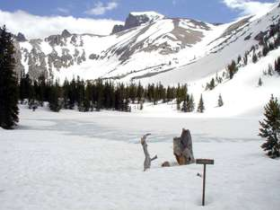 I spent an hour or so this rainy weekend planning for a future trip to Nevada’s
  NSGIC, and spatial thinking in general, are hard habits to break. For those interested in building meaningful state and national digital mapping resources, the camaraderie and synergy of NSGIC conferences, committees, and professional networking is hard to beat.